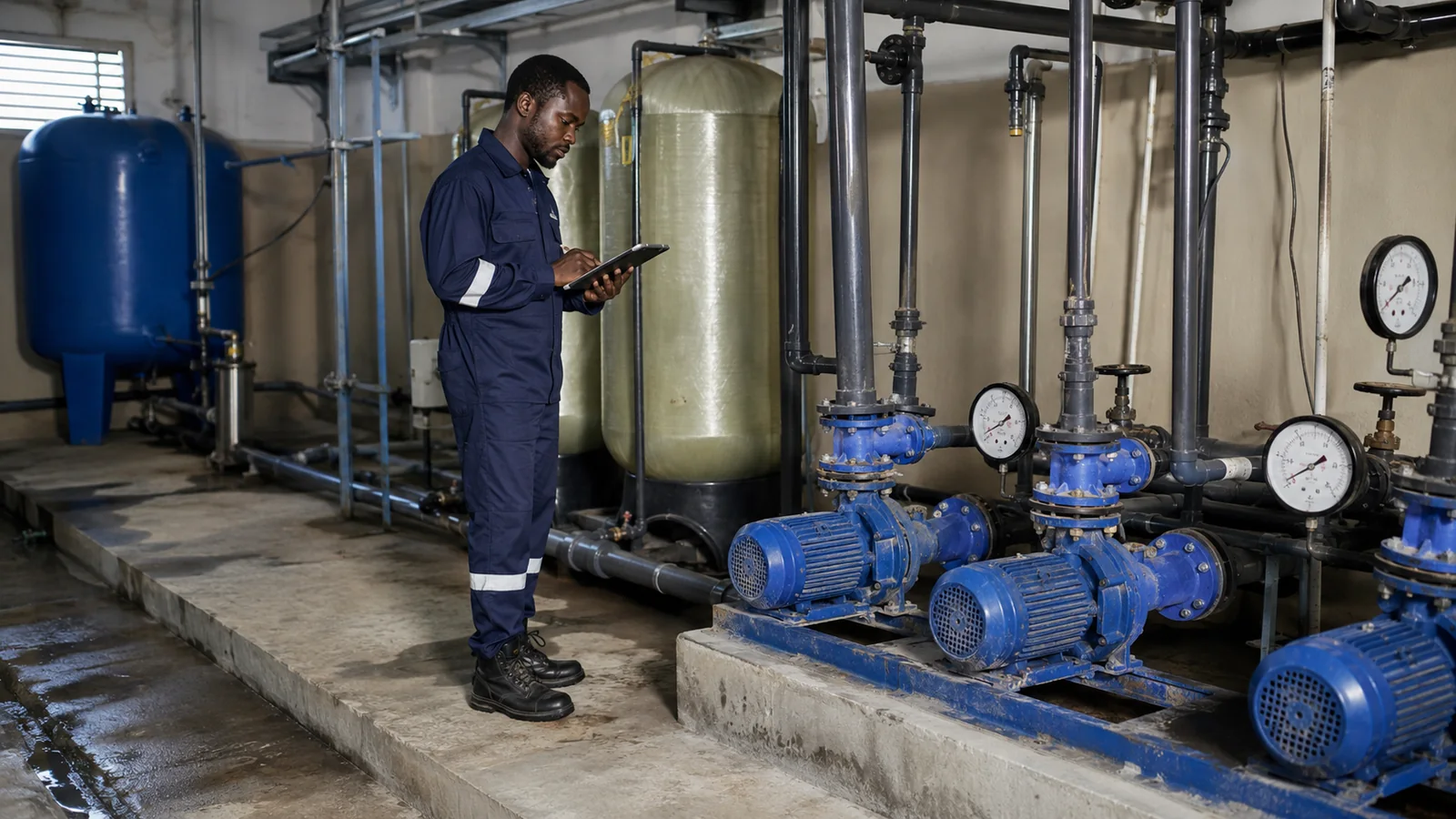
Practical perspective
A facilities maintenance plan is a controlled programme that identifies the assets requiring attention, prioritises them according to risk and service importance, schedules the necessary work, assigns responsibility and records the outcome.
Estates, office parks and public facilities contain different users, assets and operating constraints, but the planning discipline is similar. Facilities teams need accurate asset information, visible priorities, realistic access arrangements, dependable service providers and enough evidence to make informed repair-versus-replacement decisions.
A maintenance plan should not be a static annual spreadsheet. It should be a rolling management tool updated as inspections, faults, costs, operating conditions and asset performance change.
Maintenance planning is strongest when every scheduled task is linked to a known asset, a defined reason, an accountable owner and a usable completion record.
Seven controls for a practical maintenance programme
Asset information
Risk and criticality
Maintenance strategy
Annual schedule
Work-order control
Records and budget
Performance review
These controls operate as one system. An incomplete asset register produces weak priorities; weak priorities distort the budget; incomplete work-order records prevent management from understanding repeat faults and future replacement needs.
Build a reliable asset register
The asset register is the foundation of the maintenance plan. It should identify the building systems, equipment, components and maintainable areas for which the facilities team is responsible.
The register does not need to begin as a complex software implementation. A controlled spreadsheet can be effective when identifiers, locations, responsibilities and update procedures are consistent. The priority is a record that can be verified against the physical site.
- Unique asset or location identifier
- Building, floor, room, zone or physical location
- Asset category, description and service function
- Manufacturer, model, serial number and capacity where relevant
- Installation date, age or estimated lifecycle stage
- Condition, operational status and known defects
- Maintenance responsibility and service provider
- Inspection, statutory or manufacturer requirements where applicable
- Links to drawings, manuals, warranties and maintenance history
Organise records from site to building, system, equipment and maintainable component. This supports management reporting without losing the detail required for technical work.
Prioritise by condition, risk and operational criticality
Not every defect has the same consequence. A damaged finish, recurring water leak, unreliable access-control unit and defect affecting an emergency system require different response times and approval paths.
Prioritisation should combine current condition with the consequence of failure. This directs attention to assets that affect safety, service continuity, security, public access, compliance, environmental conditions or significant cost exposure.
- Could failure create a safety or health exposure?
- Would the asset interrupt essential services or access?
- Is there a statutory, contractual or manufacturer requirement?
- Could delay cause secondary damage or substantially higher cost?
- Are parts, specialist resources or shutdowns difficult to arrange?
- Does the asset have repeated faults or deteriorating performance?
Select the right maintenance strategy for each asset
Planned maintenance is not one method. Assets may require time-based servicing, condition monitoring, inspection, testing, cleaning, adjustment, statutory examination, corrective repair or planned replacement.
Planned strategies
- Time-based inspection or servicing
- Usage-based intervention
- Condition-based inspection and repair
- Testing linked to risk or required standards
- Planned renewal before unacceptable failure risk
Reactive strategies
- Immediate response after failure
- Temporary restoration pending permanent work
- Corrective repair identified during inspection
- Emergency isolation or make-safe action
- Unplanned replacement where repair is not viable
A run-to-failure strategy may be reasonable for a low-cost, non-critical item that is easy to replace and creates no significant safety or operational consequence. It is unsuitable for assets whose failure could affect people, water, power, security or business continuity.
Intervals should be based on asset-specific requirements, condition, use, environment and competent assessment. Generic schedules should not override manufacturer instructions or applicable inspection obligations.
Build an annual programme around site operations
The calendar should connect technical intervals with periods when work can realistically be completed. This is important where access, noise, water shutdowns, electrical isolations or public movement must be controlled.
Plan for seasonal and operating conditions
Roofs, drainage, stormwater routes and external works may require attention before seasonal rainfall. Office and public areas may offer better access during shutdowns, recess periods or low-occupancy weekends.
Business continuity
Prioritise power, lighting, access, water, common areas, tenant communication and work outside peak occupancy.
Resident access and shared assets
Coordinate gates, security, roads, lighting, pumps, water services, common facilities and contractor conduct around occupied homes.
Service access and documentation
Account for public movement, procurement controls, safety, operating hours, approvals, record-keeping and uninterrupted essential services.
Control work orders and service delivery
A maintenance plan becomes operational through work orders. Each instruction should give the person completing the task enough information to identify the asset, understand the issue, prepare safely and record a clear outcome.
Log the requirement
Identify the asset, location, condition, priority, requester and date.
Assess and plan
Confirm scope, controls, access, materials, service impact and competence.
Authorise and schedule
Assign responsibility, agree timing and confirm approvals.
Execute and inspect
Complete the task, control the work area and verify the result.
Record and close
Capture findings, materials, photographs, tests and follow-up work.
Update the asset history
Link completed work to the asset so repeat faults and lifecycle costs can be reviewed.
- Asset, location and work-order reference
- Condition found and likely cause where established
- Work completed and components used
- Inspection, testing or verification outcome
- Appropriate photographs
- Outstanding defect, residual risk or recommended action
- Name, date and sign-off status
Link maintenance records to budgets and lifecycle decisions
A maintenance budget should distinguish predictable routine work from corrective repairs, emergency response, backlog reduction and asset renewal. Combining these categories makes it difficult to understand whether expenditure is protecting assets or only responding to failure.
Routine planned maintenance
Recurring inspections, servicing, cleaning, testing and minor interventions required to maintain normal performance.
Corrective maintenance
Repairs identified through inspections and reports that can be planned before failure becomes critical.
Reactive and emergency work
Unplanned response, make-safe action, urgent repair, temporary services and restoration.
Lifecycle renewal and upgrades
Replacement, modernisation or major refurbishment where continued repair no longer provides acceptable value or reliability.
Use history to support replacement decisions
Age alone does not decide replacement. Consider condition, failure history, repair cost, parts availability, efficiency, operational importance, safety exposure and whether the asset still meets service requirements.
A lower annual maintenance spend is not automatically better performance. Deferred work may reduce current expenditure while increasing backlog, failure risk and future renewal cost.
Review performance and update the plan
Maintenance reporting should help management decide what to change. Counting completed jobs without reviewing risk, repeat failure, overdue work and asset condition can create a misleading picture.
- High-risk defects and overdue actions
- Repeat faults and root-cause investigations
- Planned-versus-reactive work balance
- Budget performance and forecast changes
- Contractor performance
- Asset condition and lifecycle renewals
- Required programme updates
Facilities maintenance terms used in this guide
- Asset register
- A controlled record of assets or maintainable locations, together with identifying and management information.
- Asset criticality
- A rating of the consequence an asset failure could have on safety, services, operations, cost, compliance or reputation.
- Preventative maintenance
- Planned work intended to reduce the probability or consequence of deterioration and failure.
- Corrective maintenance
- Work undertaken to correct a known defect or restore the required condition or function.
- Maintenance backlog
- Identified maintenance work that remains incomplete beyond the intended planning period or delivery date.
- Work order
- A controlled instruction that defines, authorises and records a maintenance task against an asset or location.
Frequently asked questions
Frequently asked questions
Direct answers for estate managers, property teams, facilities managers, procurement teams and public-facility administrators.
It should include an asset register, condition and criticality ratings, maintenance strategies, inspection and service intervals, an annual schedule, access and safety requirements, responsibilities, work-order controls, budgets, contractor requirements and a process for reviewing performance.
High-risk issues and open work should be reviewed routinely, often monthly. Programme performance and budgets can be reviewed quarterly, while the full asset strategy and annual programme should be refreshed at least annually or when major conditions change.
Consider condition and consequence of failure. Safety, essential services, obligations, public access, security, secondary damage, repeat faults and resource availability should influence response time.
Preventative maintenance is planned before failure based on time, usage, condition, risk or inspection requirements. Reactive maintenance begins after a fault or failure. Most facilities need both, but the plan should reduce avoidable emergencies.
No. Asset type, age, usage, environment, manufacturer requirements, occupancy, risk and applicable obligations vary. A standard template can provide structure, but intervals and priorities must be verified for the actual facility.
A rolling management system
Good maintenance planning connects site reality to management decisions.
The plan should help the facilities team see what assets exist, where risk is concentrated, which work is due, what has been completed and where repair history indicates deeper investigation or renewal.
When asset information, work orders, budgets and performance reviews are connected, maintenance becomes more predictable and decision-makers gain a stronger basis for protecting service continuity and long-term asset value.
Before publication, replace this text with the actual reviewer’s name, Lefata role and legitimate professional designation where applicable. Confirm the maintenance strategy, compliance caveats and environment-specific recommendations.